
Product Introduction
The weighing scale is the core batching and weighing equipment for dry-mix mortar production lines. It is used for automatic weighing of raw materials such as sand, cement, fly ash, calcium carbonate and various additives. The unit consists of weighing hopper, load cells, weighing controller, pneumatic discharge valve, flexible connector and support frame. Linked with the control system, it realizes fast & fine feeding, automatic drop compensation, auto tare, data storage and formula management. It works synchronously with mixers and conveying equipment to stabilize the proportion of mortar raw materials. It guarantees the strength, water retention, adhesion and other performance of finished mortar. It is compatible with tower-type, platform-type and simple mortar production lines, and can also be used for metering system retrofitting of existing production lines.
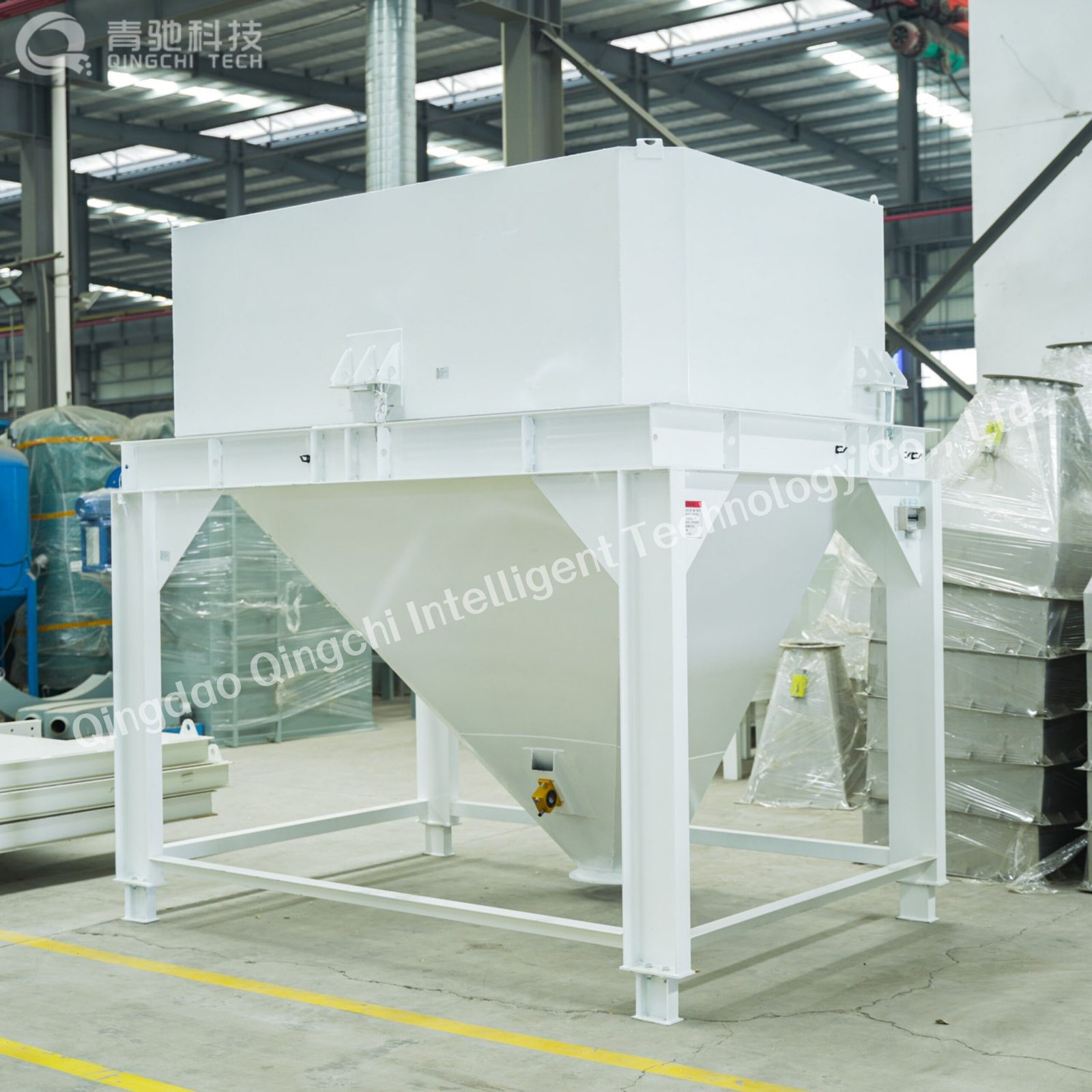
Core Advantages
✅ Multi-speed Feeding, High & Stable Weighing Accuracy Adopt dual-speed feeding (coarse + fine feeding) with intelligent drop compensation algorithm. Aggregate, cementitious powder and additives are weighed on separate scales. The micro scale for additives achieves higher precision. It meets the batching accuracy standard of dry-mix mortar industry and reduces quality fluctuation caused by improper proportion.
✅ Heavy-duty Structure for Powder Working Conditions The hopper is made of wear-resistant steel (304 stainless steel optional). Large cone design prevents material buildup and bridging. Flexible connectors isolate vibration and airflow interference. Load cells are equipped with overload protection and dustproof sealing structure. Suitable for dusty and long-time continuous production. Complete discharging with little residue to avoid cross-contamination.
✅ Intelligent Electric Control, Easy to Connect with Full Production Line Equipped with special weighing controller. Multiple formulas can be stored and recalled with one click. Real-time weight display, over-limit alarm and self-diagnosis of faults. Support RS485 communication and can connect to PLC, host computer and cloud management system. Traceable production data. Auto / manual dual mode for easy maintenance and commissioning.
✅ Modular Design, Flexible Installation & Retrofit Single scale or multi-scale combination available according to production capacity. Compact structure, suitable for hoisting or bracket installation. Ideal for new production line matching and metering upgrading of old lines. Reasonably arranged access openings for easy cleaning, maintenance and calibration.
✅ Dust Reduction & Lower Material Loss Dust removal ports are reserved to reduce dust emission during feeding and discharging. Precise batching cuts raw material waste and excessive consumption of additives to lower production cost.
Specification Parameters
| Item | Specification |
|---|---|
| Weighing Type | Aggregate Scale, Cementitious Powder Scale, Additive Micro Scale |
| Standard Range | Aggregate Scale: 500–4000 kg Powder Scale: 100–2000 kg Additive Micro Scale: 0.5–50 kg |
| Dynamic Batching Accuracy | Aggregate: ≤±1% Cement / Powder: ≤±0.5% Additive: ≤±0.3% |
| Load Cell | Weighing load cell, 150% safe overload, dust-proof |
| Hopper Material | Q235 wear-resistant steel (standard), 304 stainless steel (optional) |
| Discharge Mode | Pneumatic arc valve / butterfly valve, dual valve to prevent ash backflow |
| Control Mode | Weighing instrument + PLC linkage, automatic / manual |
| Communication | RS485, Modbus supported |
| Working Environment | -10℃ ~ 50℃, relative humidity ≤85% (no condensation) |
| Power Supply | AC220V / 380V 50Hz |
| Optional Functions | Remote monitoring, cloud data storage, report printing, loss-in-weight metering, vibratory arch breaker |
Operation Notes
- The mounting base must be level and firm to avoid vibration transfer from mixers or vibrating screens. Flexible connectors shall not be tensioned or bear the weight of the hopper; otherwise weighing accuracy will be affected.
- Avoid impact feeding and overloading. Do not stand or place heavy objects on the scale. Check load cell junction boxes regularly for waterproof and dustproof protection.
- Perform zero calibration before production. Regular calibration is recommended once a month; shorten the cycle under harsh conditions. Recalibration is required after replacing load cells or flexible connectors.
- Clean sticky and accumulated materials inside the hopper regularly. Material buildup causes zero drift and weighing error. Do not strike load cells or hopper with hard tools during cleaning.
- Maintain stable air pressure. Service pneumatic valves periodically to prevent jamming and leakage. Keep electric cabinet away from strong electromagnetic interference.
- Stainless steel hopper and anti-corrosion load cells are recommended for humid or corrosive sites to extend service life.
- Cut off power and air supply and implement lockout before maintenance.
Application Scenarios
- Ordinary dry-mix mortar lines: masonry mortar, plaster mortar, floor mortar
- Special mortar lines: tile adhesive, grout, self-leveling compound, waterproof mortar, gypsum mortar, putty powder
- Powder batching system for calcium powder, fly ash, mineral powder, cellulose ether, redispersible polymer powder
- Supporting for new complete mortar plants and metering system renovation of old lines
- Semi-automatic small mortar equipment and large automatic dry-mix mixing tower
FAQ
Q1: Why is the weighing scale inaccurate with large batching error?
A: Common causes: vibration transfer, tensioned flexible connector, material buildup on hopper, zero drift, damaged / damp load cell, unstable air pressure, valve leakage or airflow disturbance. Clean residual material, reset zero point and check vibration and flexible connection first.
Q2: Why use a separate micro scale for additives instead of sharing with cement scale?
A: The dosage of additives is extremely low (per mille level). Large scales have insufficient resolution, and the error will seriously affect water retention, adhesion and open time of mortar. Micro scales feature small range and high resolution for low-dose additives.
Q3: Can this weighing scale match my existing mixer?
A: Yes. Custom interface and communication protocol are available to connect with most mortar mixers, screw conveyors and elevators. We provide installation dimension drawing and electrical docking scheme.
Q4: Can I buy only the scale body without your control system?
A: Yes. We can supply hopper and load cell assembly separately or matching weighing instrument. Please provide your PLC model so we can offer communication protocol.
Q5: Are load cells easy to break in heavily dusty workshops?
A: Standard load cells adopt dustproof sealing with reserved dust removal ports. Heavy-duty protected load cells can be upgraded for extremely dusty conditions. Regular cleaning of junction boxes ensures stable service life.
Q6: How often should the scale be calibrated?
A: Once a month under normal conditions. For 24-hour continuous production with heavy dust and vibration, calibrate every 15 days. Recalibration is mandatory after component replacement, relocation or overhaul.