
Product Introduction
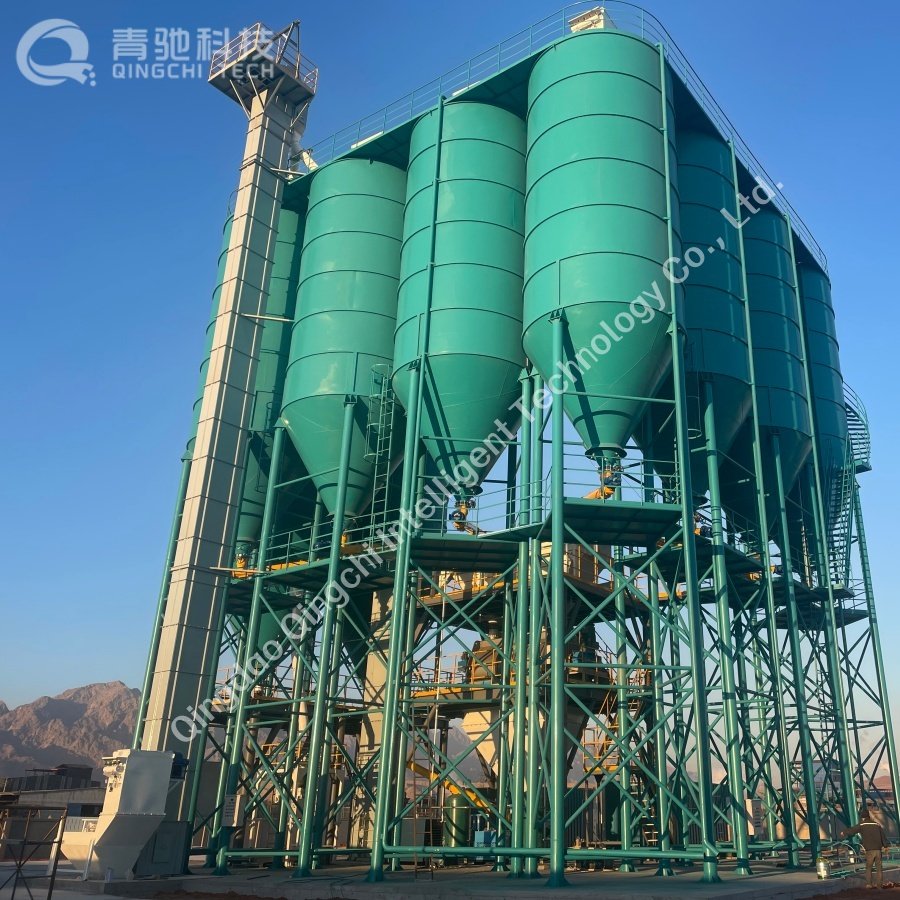
Dry mortar silo is a dedicated storage tank supporting dry mortar production lines, mainly used for sealed storage of finished dry mixed mortar such as masonry mortar, plastering mortar, floor mortar, and thermal insulation mortar. It is equipped with auxiliary components including a dust collector, level indicator, fluidization device, arch-breaking vibrator, discharging valve and conveying interface. The silo realizes closed storage, automatic material monitoring and stable quantitative discharging. It effectively prevents dry mortar from dampening, segregation and material waste, matches continuous operation of dry mortar batching, mixing and packaging systems, and is the core storage equipment for standardized, large-scale dry mortar production.
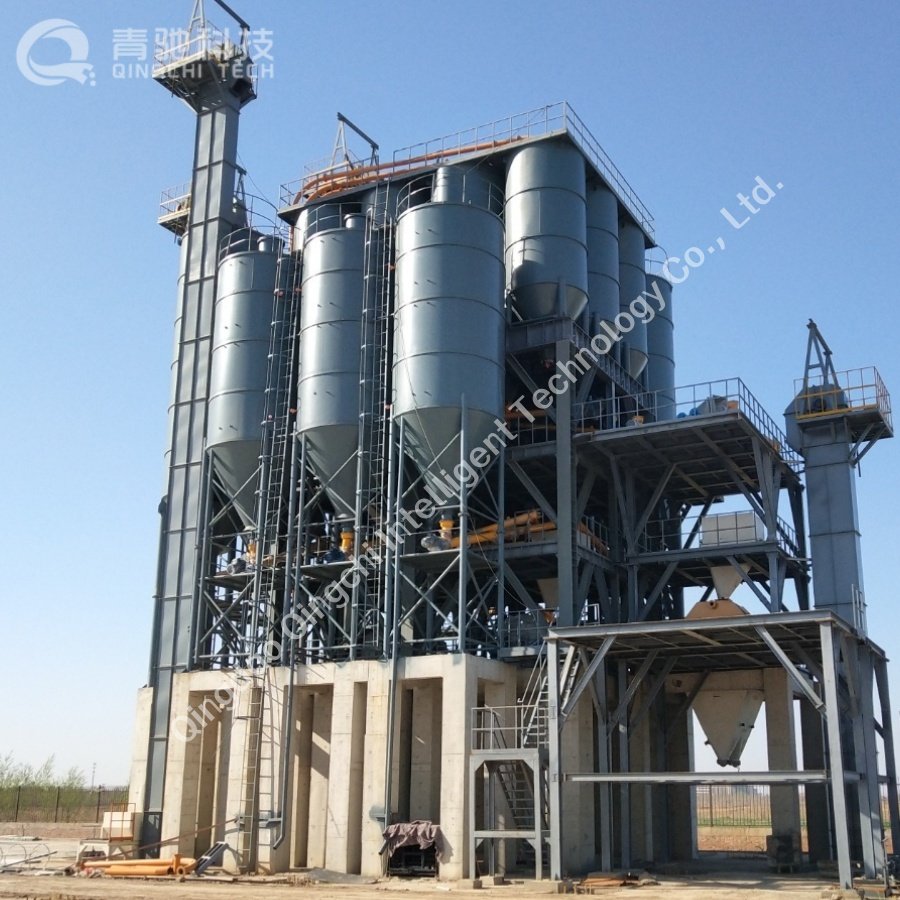
Core Highlights
- Fully sealed anti-damp structure: Adopts welded steel tank body with good sealing performance, isolates external moisture, avoids mortar agglomeration and invalidation, and guarantees long-term storage quality of dry powder materials.
- Anti-blocking & anti-segregation design: Built-in arch breaking vibrator and air fluidization device eliminate material bridging and arching at the cone hopper; reasonable cone angle reduces mortar segregation to keep material uniformity.
- Intelligent material level monitoring: Equipped with high and low level sensors, which can feed back material stock in real time, support linkage with the batching system, and realize automatic reminding for feeding and material shortage.
- Integrated dust removal configuration: Matched with pulse dust collector at the top. Dust generated during feeding is filtered and collected, reducing powder overflow, meeting environmental protection emission requirements and improving workshop cleanliness.
- Flexible discharge & easy matching: Multiple discharge forms such as screw conveyor and pneumatic conveying are optional. It can connect with automatic packaging machine, bulk tanker and weighing batching system to adapt to diversified production processes.
- Robust and safe structure: The tank body uses high-quality carbon steel plate, reinforced by stiffeners. It comes with safety guardrail, manhole, pressure relief valve and anti-overpressure protection device to ensure stable operation under long-term load.
Specification Parameters
| Item | Parameter |
|---|---|
| Silo Volume | 30m³ / 50m³ / 80m³ / 100m³ / 150m³ / 200m³ (Customizable) |
| Main Material | Q235B Carbon Steel |
| Working Pressure | Normal pressure, micro-negative pressure |
| Hopper Cone Angle | 60° (Optional 55° / 65°) |
| Supporting Dust Collector | Pulse bag dust collector / cartridge dust collector |
| Material Level Detection | High-low level switch + continuous level transmitter (Optional) |
| Arch-breaking Device | Electric vibrator / air fluidization pad |
| Discharge Outlet Diameter | Φ219mm / Φ273mm / Φ325mm (Optional) |
| Surface Treatment | Sandblasting + anti-rust primer + weatherproof topcoat |
| Supporting Accessories | Safety guardrail, manhole cover, pressure relief valve, ladder, flange |
| Working Environment Temperature | -20℃ ~ +60℃ |
Precautions for Use
- The silo foundation must be designed and constructed strictly according to the load drawing provided by the manufacturer. Ensure the foundation is firm and level to prevent tilt or settlement.
- Before feeding for the first time, check whether all connecting bolts, sealing gaskets, dust removal pipelines and electrical circuits are installed in place and free of looseness or air leakage.
- Do not feed wet, caking or sundry-mixed mortar into the silo. Foreign matters such as iron blocks, wood scraps will easily block the discharge port and damage the conveying equipment.
- Strictly control the feeding speed. Do not exceed the rated volume. Overfeeding will trigger overpressure risk and affect the dust removal effect.
- Check the dust collector regularly: clean or replace filter bags/filter cartridges on schedule. Blocked filter elements will cause excessive internal pressure and dust leakage.
- When starting discharging, turn on the vibrator or fluidization device first if bridging occurs. It is forbidden to knock the silo tank body violently with heavy tools.
- Regularly inspect the tank body welds and anti-corrosion coating. Repair paint peeling and weld cracks timely to avoid rust penetration.
- Cut off all power supply and lock the control switch before entering the silo for internal maintenance. Implement confined space operation specifications and assign a guardian.
- Stop feeding in rainy and humid weather if the feeding pipeline is exposed outdoors, to prevent moisture from entering the silo.
Application Scenarios
- Dry mortar production line: Storage of finished plastering mortar, masonry mortar, tile adhesive, putty powder, self-leveling mortar, waterproof mortar and thermal insulation mortar.
- Ready-mixed mortar bulk transfer station: Bulk storage and loading for mortar bulk trucks.
- Building construction site: On-site storage tank for engineering dry mortar supporting mixing system.
- Powder building material factory: Storage of raw powder such as cement, fly ash, mineral powder, limestone powder.
- Prefabricated component factory: Storage of dry powder raw materials for precast concrete and special mortar.
FAQ
Q1: Why does dry mortar cake and agglomerate inside the silo?
A1: The main reasons are air leakage of sealing parts, damaged dust collector, moisture entering from feeding pipeline, or long-term stock retention. Check the sealing performance and dust removal system, and arrange material turnover regularly.
Q2: What to do if the mortar bridges and cannot discharge?
A2: Start the supporting vibrator or air fluidization device. Do not use heavy hammers to strike the silo. If blockage is serious, stop the machine and clean the hopper after power cut.
Q3: Can the silo be customized in capacity and size?
A3: Yes. We support non-standard customization of volume, discharge structure, height and matching accessories according to customer’s site layout and production capacity requirements.
Q4: Is the silo suitable for outdoor long-term placement?
A4: Yes. The surface adopts anti-rust and weather-resistant coating. For coastal high-humidity and salt-spray areas, we can provide anti-corrosion upgrade such as epoxy coating.
Q5: How often should maintenance be carried out?
A5: Daily: Check dust emission, vibration and discharging condition. Weekly: Fasten bolts and check level sensors. Monthly: Clean dust removal filter elements. Annual: Comprehensive inspection of welds, anti-corrosion layer and foundation settlement.
Q6: Can one silo store different types of dry mortar alternately?
A6: Not recommended. Different mortar formulas are easy to cross-contaminate and affect product performance. If alternate use is required, thoroughly clean the whole silo interior before material replacement.