
Product Introduction
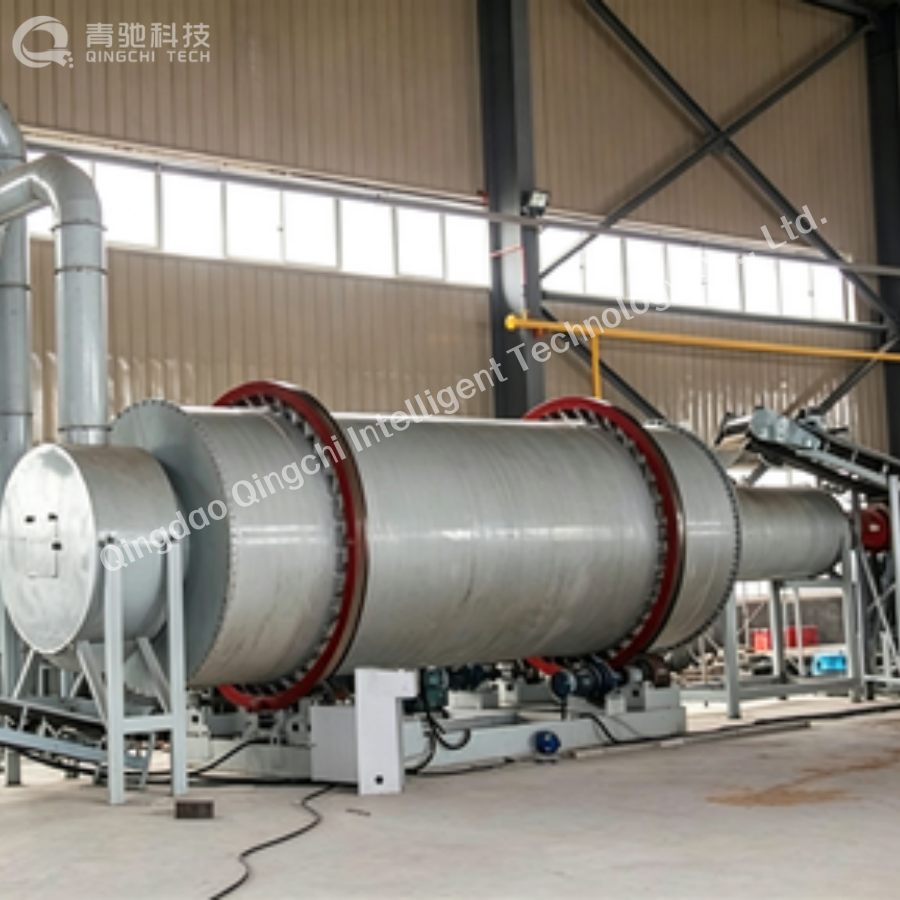
This rotary dryer is independently developed for dry-mix mortar production lines. It is mainly used for dewatering and drying river sand, manufactured sand, quartz sand, limestone powder, slag, fly ash and other aggregate raw materials. It can be directly connected with screening, lifting and silo systems to realize fully automatic continuous feeding, drying and discharging.
Adopting a three-pass rotary drum structure, the equipment achieves sufficient heat exchange and stably reduces the moisture content of raw materials to meet the technological requirements of mortar production. It is compatible with ordinary dry-mix mortar, thermal insulation mortar, self-leveling mortar, tile adhesive and other mortar production lines. Featuring stable operation and controllable dust emission, it is the key pretreatment equipment for raw materials in mortar plants.
Core Advantages
✅ Three-pass Heat Exchange Structure with High Drying Efficiency The nested three-pass design enables counter-flow heat exchange between hot air and materials, greatly improving heat utilization and cutting energy consumption. It occupies a smaller footprint under the same capacity, fitting compact workshop layout of mortar factories.
✅ Controllable Discharge Moisture for Mortar Process The rotating speed and inlet air temperature are adjustable according to mortar formulas to stabilize the moisture content of sand at discharge. It avoids mortar caking, unstable strength and inaccurate batching caused by fluctuating moisture of raw materials.
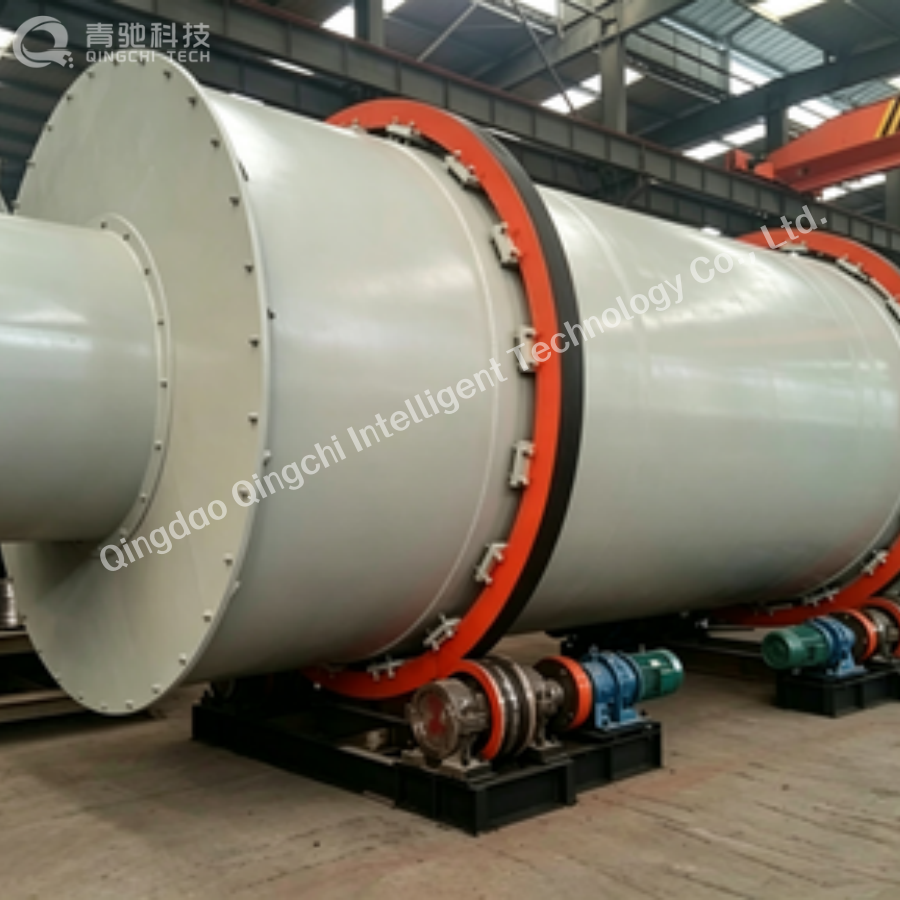
✅ Wear-resistant Structure for High-abrasion Sand Conditions The drum is equipped with wear-resistant liners and thickened lifting plates optimized for scouring of sand aggregates. Heavy-duty supporting rollers, riding wheels and retaining rollers are adopted to support long-term non-stop 24-hour operation.
✅ Complete Supporting System for Seamless Connection with Mortar Lines Optional supporting systems include burners (natural gas / biomass / coal / diesel), baghouse dust collectors, induced draft fans, feeding screws, discharge chutes and temperature & pressure monitoring modules. It can link with bucket elevators, vibrating screens and raw material silos to form an integrated automatic dry-mix mortar production system.
✅ Multi-stage Sealing & Dust-proof, Environmentally Friendly Multiple flexible seals are installed at feeding and discharging ends to reduce air leakage and dust escape. Matched with dust removal equipment, it meets industrial environmental protection standards and keeps the workshop clean.
✅ Easy Operation & Maintenance The main drive adopts variable frequency speed regulation with an intuitive HMI for real-time monitoring of drum temperature, discharge temperature and current. Reasonably arranged access ports facilitate replacement of liners and lifting plates and shorten downtime for maintenance.
Specification Parameters
Note: Standard models as below; customized solutions available according to production capacity of mortar lines
| Model | Capacity (Wet Sand) | Inlet Moisture | Outlet Moisture | Heat Source | Total Installed Power | Drum Specification |
|---|---|---|---|---|---|---|
| Φ1.5×12m | 3–5 t/h | ≤18% | ≤0.5% | Natural gas / Biomass / Coal | Approx. 28 kW | Φ1.5×12 m, three-pass |
| Φ1.8×14m | 6–10 t/h | ≤18% | ≤0.5% | Multiple options | Approx. 42 kW | Φ1.8×14 m, three-pass |
| Φ2.0×16m | 10–15 t/h | ≤18% | ≤0.5% | Multiple options | Approx. 55 kW | Φ2.0×16 m, three-pass |
| Φ2.4×18m | 15–25 t/h | ≤18% | ≤0.5% | Multiple options | Approx. 75 kW | Φ2.4×18 m, three-pass |
Additional Parameters:
- Drum Rotation Speed: 0.8–3 r/min (VFD adjustable)
- Working Mode: Continuous drying
- Standard Accessories: Combustion system, dust collector, induced draft fan, support & retaining rollers, inlet & outlet seals, temperature sensors
- Material: Drum Q235; lifting plates & liners made of wear-resistant steel
Remarks: Actual capacity is affected by material type, initial moisture, heat source quality and ambient temperature. We can recalculate the scheme based on site working conditions.
Operation Precautions
- Follow the strict startup sequence: start the induced draft fan and dust collector first, then the rotary drum, and finally the feeding system and ignition. Reverse the sequence for shutdown. Never stop the drum or cut off induced air under high temperature, which may cause local thermal deformation or flashback.
- Maintain uniform feeding. Keep large hard blocks, steel bars and iron blocks out of the drum to prevent damage to lifting plates. Reduce feeding rate timely if incoming moisture fluctuates sharply to avoid blockage or excessive residual moisture.
- Safe management of heat source: For gas-fired models, inspect pipelines and conduct leak detection regularly. For biomass or coal-fired models, clean ash deposits and prevent flue coking. Do not operate over temperature; reduce feeding or flame power once discharge temperature exceeds the limit.
- Lubrication and routine inspection: Fill lubricating grease for supporting rollers, retaining rollers and reducer bearings periodically. Check air leakage, dust leakage, roller vibration and loose anchor bolts every day.
- Timely maintenance for dust removal system: Clean dust bags regularly and replace damaged filter bags. Failed dust removal will not only violate environmental regulations but also lead to dust accumulation on fans, reduced air volume and poor drying performance.
- Operation in low-temperature & humid environment: Raise temperature gradually in cold weather to avoid cracking caused by drastic thermal shock. Empty residual materials inside the drum for long-term shutdown to prevent caking and adhesion.
- Safety protection: Install warning signs on high-temperature areas. Cut off power and hang lockout tags before maintenance. Fully ventilate and cool down the drum before internal inspection.
Application Scenarios
- ✅ Supporting drying unit for dry-mix mortar lines: masonry mortar, plastering mortar, tile adhesive, grout, self-leveling mortar, waterproof mortar, thermal insulation mortar
- ✅ Drying of manufactured sand, river sand and quartz sand aggregates
- ✅ Dehydration of slag, steel slag, limestone granules and fly ash
- ✅ Sand and gravel yards, batching plant raw material pretreatment
- ✅ Matched with screening, lifting and storage systems to form an automatic raw material pretreatment section
FAQ
Q1: Can the dryer reduce sand moisture below 0.5%?
A: With stable incoming moisture, sufficient heat supply and normally operated induced draft & dust removal system, our machine can stably reach sand moisture ≤0.5%, satisfying most dry-mix mortar production requirements. If incoming moisture fluctuates heavily, we recommend adding a pre-homogenizing silo.
Q2: Which heat source is better for mortar plants, natural gas or biomass?
A: Natural gas is clean, easy to operate and friendly for strict environmental assessment, suitable for factories with gas supply access. Biomass features lower running cost and is ideal for customers with abundant biomass materials and cost control requirements. We will recommend proper heat source solutions according to local policies.
Q3: Can this dryer connect directly with your full mortar production line?
A: Yes. We can match hoppers, screw feeders, bucket elevators, vibrating screens and raw material silos for overall linkage with unified electric control to avoid capacity mismatch.
Q4: Why are discharged materials uneven, some dry and some wet?
A: Common causes: unstable feeding, worn or fallen lifting plates, insufficient air volume of induced draft fan, uneven hot air distribution or material blockage inside the drum. First check feeding stability and dust & induced draft system, then inspect lifting plates.
Q5: What is the warranty policy?
A: The main drum is covered under warranty as stipulated in the contract. Wearing parts including lifting plates, liners, seals, filter bags and bearings are consumables and excluded from the main warranty. We supply original spare parts and provide on-site installation, commissioning and maintenance services long-term.
Q6: Can you make non-standard models if the workshop space is limited?
A: Customization is supported. We can adjust drum dimensions and inlet/outlet directions according to workshop length, height and layout, and integrate dust collectors to save space.